In this article
- Why the Whipple exists
- Who needs it
- Volume matters more here than anywhere
- Before surgery
- The operation
- Complications to know about
- Recovery, week by week
- Eating after a Whipple
- Robotic Whipple
Why the Whipple exists
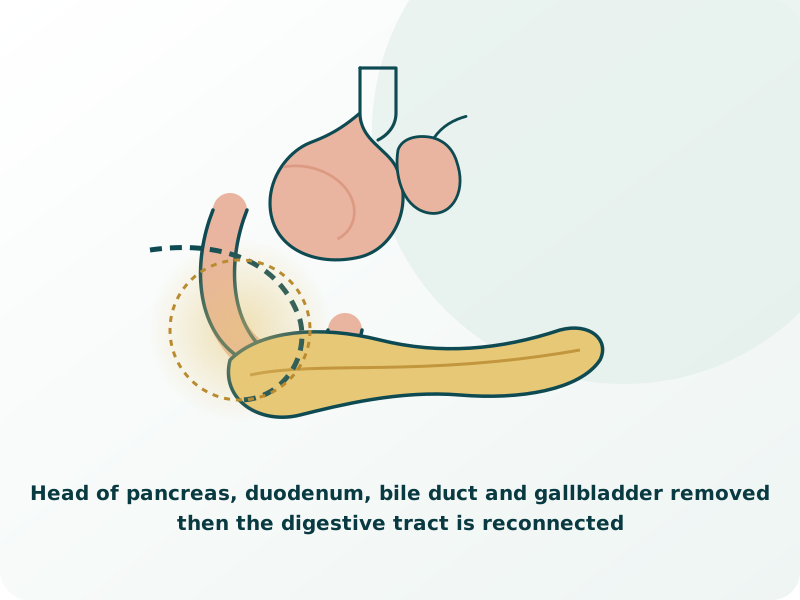
Cancers of the head of the pancreas, the ampulla (where the bile duct enters the intestine), the lower bile duct and the duodenum sit in a crowded corner where four organs meet. They cannot be removed one at a time. The Whipple procedure — pancreaticoduodenectomy — removes the head of the pancreas, the duodenum, the gallbladder, the lower bile duct and sometimes the lowest part of the stomach as a single block, and then rebuilds the plumbing with three joins: pancreas to intestine, bile duct to intestine, and stomach to intestine.
Who needs it
Pancreatic head cancer, ampullary cancer, distal cholangiocarcinoma and duodenal cancer are the main indications. Some pre-cancerous cysts (IPMN), neuroendocrine tumours and severe chronic pancreatitis confined to the head also need it. Painless jaundice with pale stools and itching is the classic presentation — it should never be watched.
Volume matters more here than anywhere
Large studies show that mortality after the Whipple is several times higher at hospitals that do a handful a year than at those that do dozens. The reason is not only the operation but everything around it: recognising and managing a pancreatic leak early, interventional radiology for collections, ICU care, nutrition. Ask how many the surgeon and the hospital do.
Before surgery
Staging with a pancreas-protocol CT and often a PET-CT; tumour marker CA 19-9; endoscopic ultrasound and biopsy where the diagnosis is uncertain. Severe jaundice may need a temporary stent. Nutrition is built up and diabetes controlled. For tumours that touch major vessels (borderline resectable), chemotherapy is given first to shrink the tumour — this is now standard.
The operation
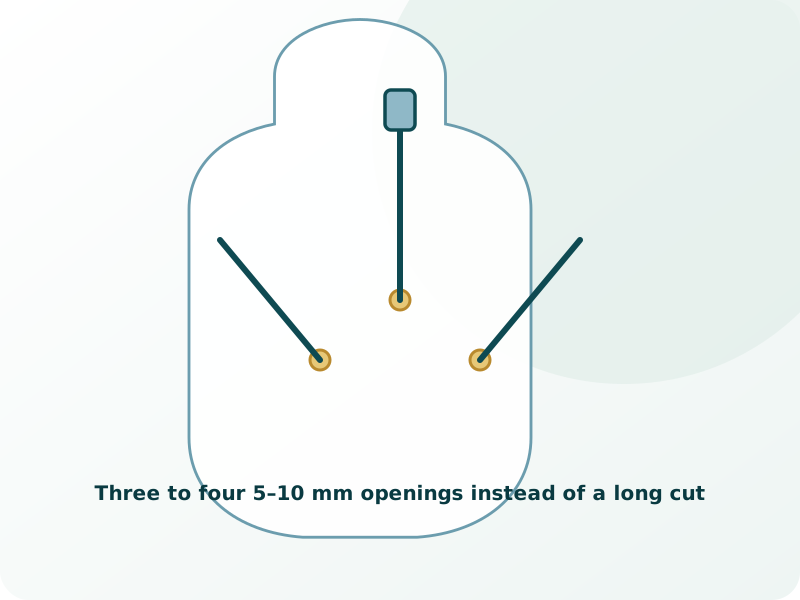
Five to seven hours under general anaesthesia, through an upper abdominal incision or, in selected patients, robotically through ports. The tumour is removed with its lymph nodes; the pancreatic duct, bile duct and stomach are joined to a loop of small intestine. Dr Gupta's transplant background means vascular reconstruction — when the tumour involves the portal vein — can be done in the same operation.
Complications to know about
The pancreatic join can leak in about 10–20% of patients; most leaks are managed with the drain left at surgery and settle within days to weeks. Delayed gastric emptying — the stomach taking time to move food — affects some patients in the first week and resolves. Bleeding, infection and, rarely, a return to theatre can occur. Knowing these in advance means they are inconveniences, not surprises.
Recovery, week by week
Week 1: ICU for one or two days, walking from day one, sips of water from day two, drains and tubes removed as tests allow. Week 2: soft diet, discharge around day 10–14 with enzyme capsules taken with meals. Weeks 3–6: home, small frequent meals, weight monitored, energy gradually back. Weeks 6–8: adjuvant chemotherapy usually starts. Full strength by two to three months.
Eating after a Whipple
Enzyme capsules with every meal replace what the removed pancreas would have produced. Small, frequent meals, low in fat initially. Blood sugar is checked because a small proportion of patients develop diabetes. A dietitian meets you before discharge and at each follow-up.
Robotic Whipple
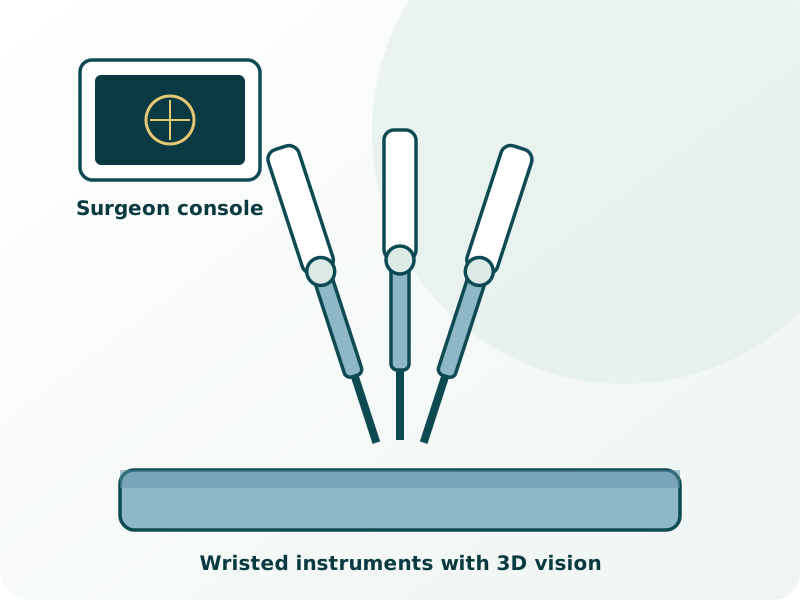
In selected patients — smaller tumours, no vascular involvement — the operation is done through robotic ports with the same lymph node clearance, less blood loss and fewer wound complications. It is not for everyone, and the choice is made on the scans.
Sources
- Birkmeyer JD, et al. Hospital volume and surgical mortality in the United States. N Engl J Med 2002;346:1128–1137.
- Cameron JL, et al. One thousand consecutive pancreaticoduodenectomies. Ann Surg 2006;244:10–15.
- NCCN Clinical Practice Guidelines in Oncology: Pancreatic Adenocarcinoma.
Dr Manoj Gupta
MBBS, MS, DNB (GI Surgery). Senior Director & Head, Robotic & Laparoscopic GI Surgery, GI Oncology and Liver Transplant, Yatharth Super Speciality Hospital. 20+ years, 500+ liver transplants.
This article is general medical education and does not replace a consultation. Figures quoted are from the sources listed and from typical outcomes at experienced centres; your own numbers depend on your condition.