Minimally Invasive & Robotic Esophagectomy in Noida
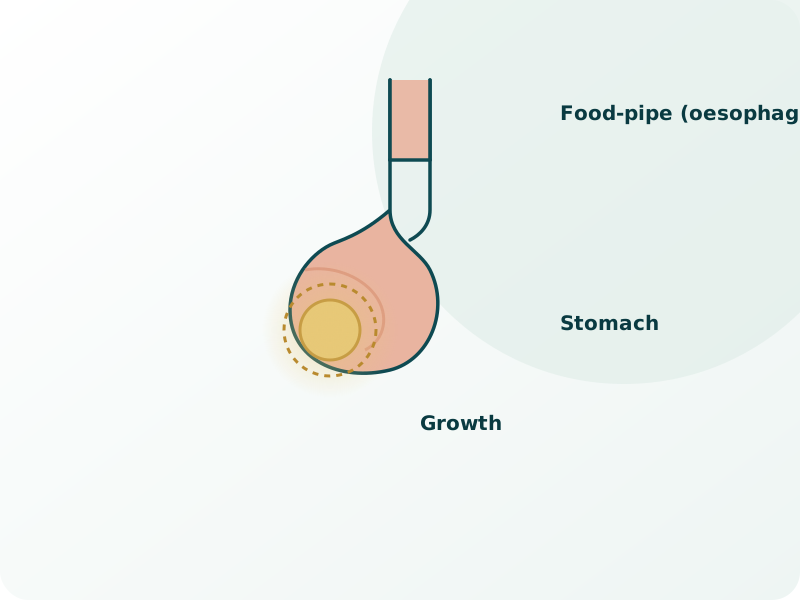
Esophagectomy removes the cancerous food-pipe and rebuilds the swallowing passage using the stomach. Done through keyhole ports in the chest and abdomen — or with the da Vinci robot — it avoids the large thoracotomy and laparotomy cuts of traditional surgery, halving lung complications and getting patients walking on day one.
How the operation is done
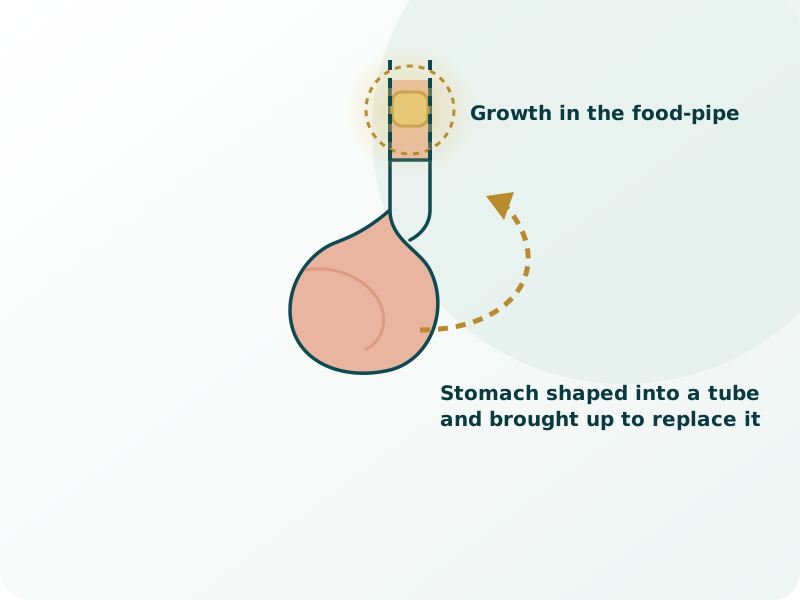
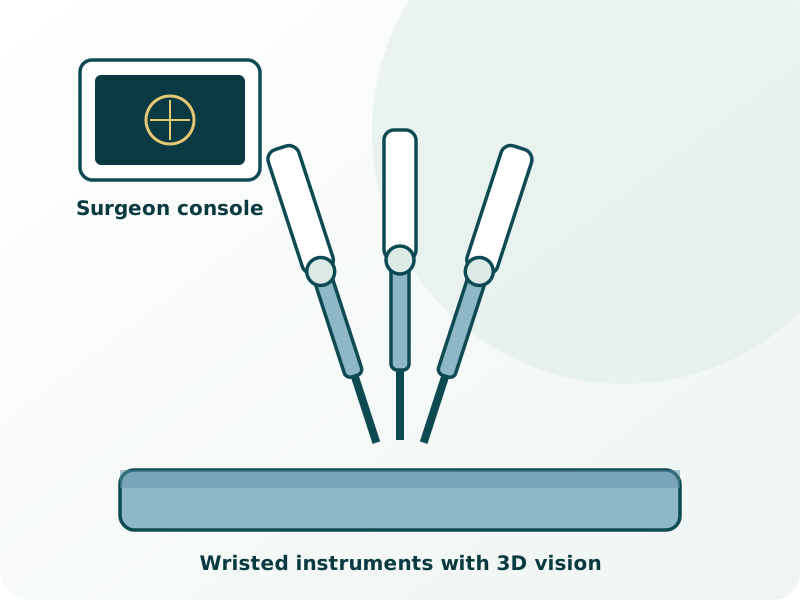
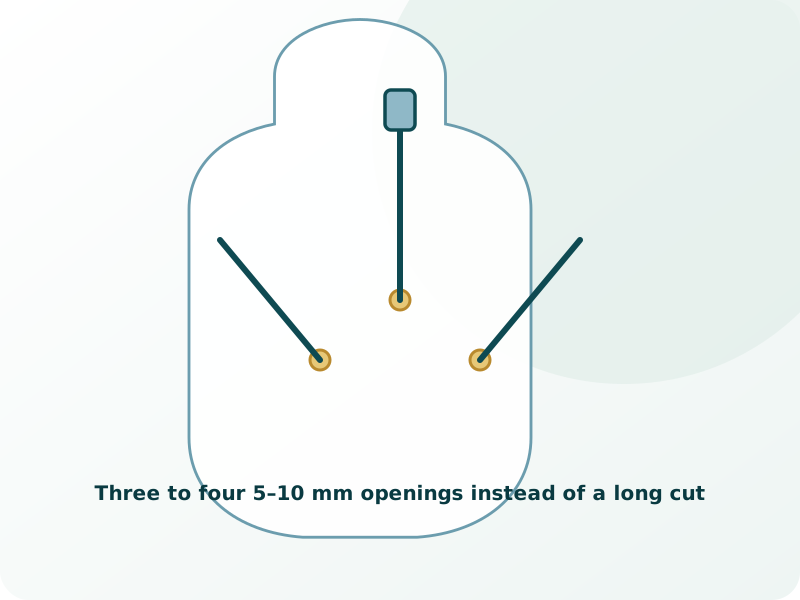
Through 4–5 small ports in the abdomen, the stomach is freed and shaped into a narrow tube. Through 4 ports in the right chest, the oesophagus with its lymph nodes is removed. The stomach tube is then brought up and joined to the remaining oesophagus in the chest (Ivor Lewis) or the neck (McKeown). The robot adds wristed instruments for dissection around the airway and the nerves to the voice-box.
Why keyhole matters here
Chest infections and pneumonia are the main danger after esophagectomy. Avoiding the rib-spreading chest incision means less pain, better breathing and coughing, and fewer lung complications — the single biggest driver of recovery after this operation.

Recovery
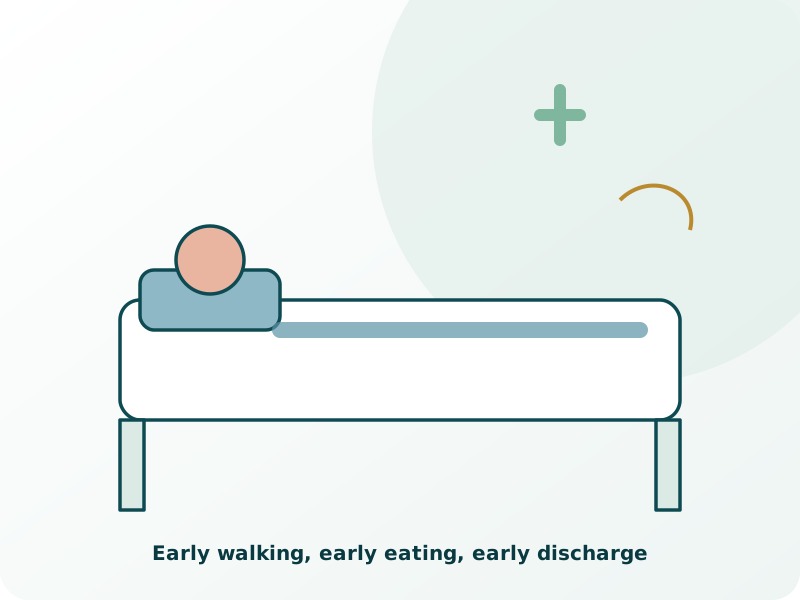
ICU for 1–2 days, walking on day 1, a feeding tube into the intestine for nutrition while the join heals, a swallow study around day 5–7, then liquids and soft food. Home in 8–12 days. Chemotherapy or radiotherapy is usually given before surgery, not after.
Conditions treated with minimally invasive & robotic esophagectomy
Why choose Dr Manoj Gupta for minimally invasive & robotic esophagectomy
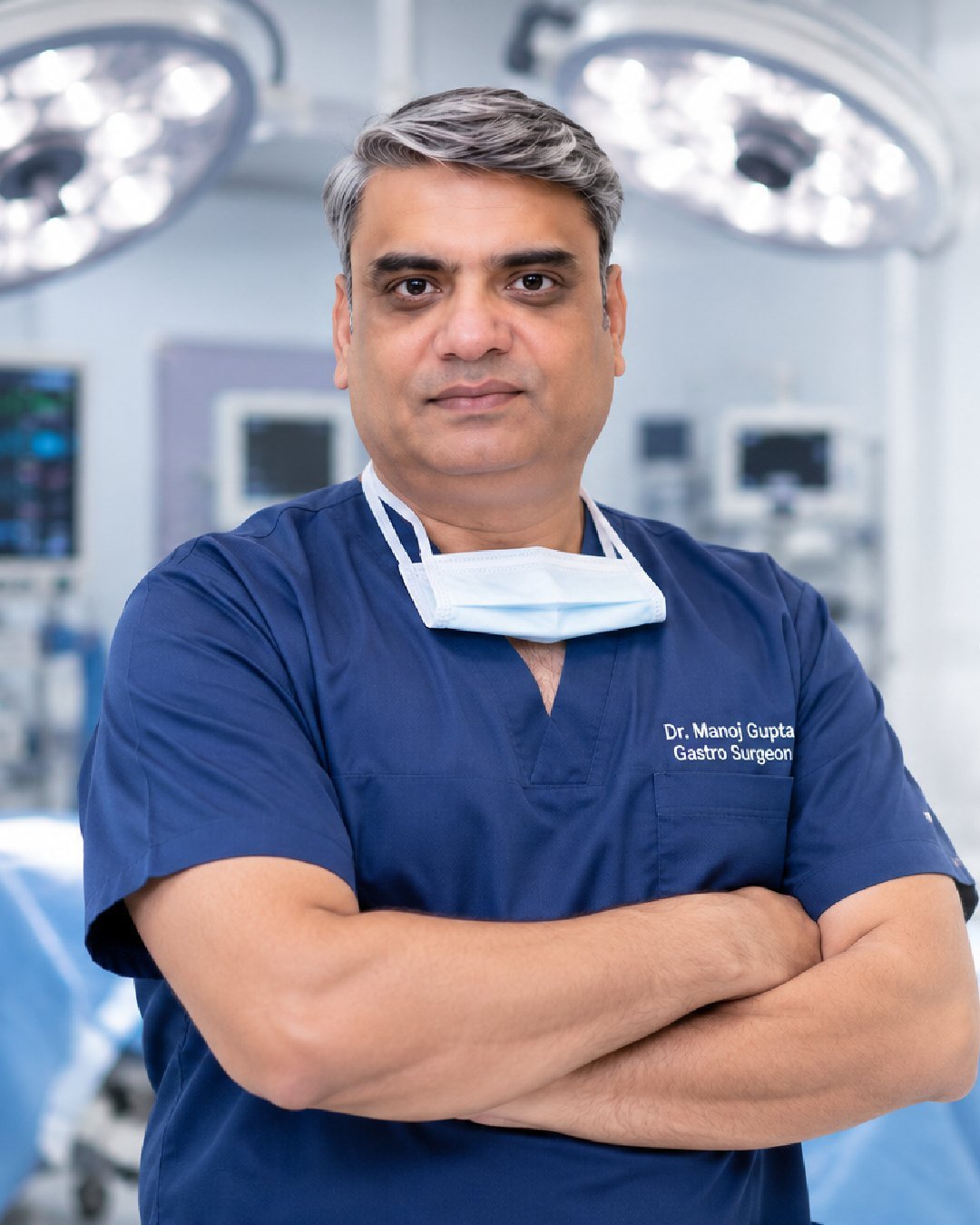
- Senior Director & Head of Robotic and Laparoscopic GI Surgery at Yatharth Super Speciality Hospital — full robotic suite, liver ICU and 24×7 emergency team.
- Trained where the difficult cases go: DNB in GI Surgery at Sir Ganga Ram Hospital, liver transplant fellowships at Apollo and Ganga Ram.
- 500+ liver transplants — the bleeding control and bile-duct skills that make every abdominal operation safer.
- Straight answers. Dr Gupta reviews your scans himself and only recommends surgery when it will help.
Questions about minimally invasive & robotic esophagectomy
Who is a candidate for minimally invasive esophagectomy?
Most patients with resectable esophageal cancer who are fit for surgery, including after chemoradiotherapy. Very large tumours stuck to the airway or aorta may need a different plan.
Will my voice change?
Temporary hoarseness can occur if the recurrent laryngeal nerve is bruised, particularly with a neck join. Robotic dissection helps protect the nerve, and most hoarseness recovers.
Other procedures
Not sure if you need surgery? Ask first.
Bring your reports for a clear, honest opinion. Same-day and evening appointments available.