In this article
- A cancer with a geography
- Why here
- The warning signs on an ultrasound
- Why the first operation decides everything
- Cancer found after a routine gallbladder operation
- What the radical operation involves
- Chemotherapy and results
- If you have gallstones and live in the Gangetic belt
A cancer with a geography
Gallbladder cancer is rare in most of the world and common in a band across northern India — Uttar Pradesh, Bihar, Delhi, West Bengal and Assam — where population cancer registries record incidence rates among the highest reported anywhere, particularly in women. Patients in Noida, Ghaziabad, Meerut, Bulandshahr and Hapur are squarely in that band.
Why here
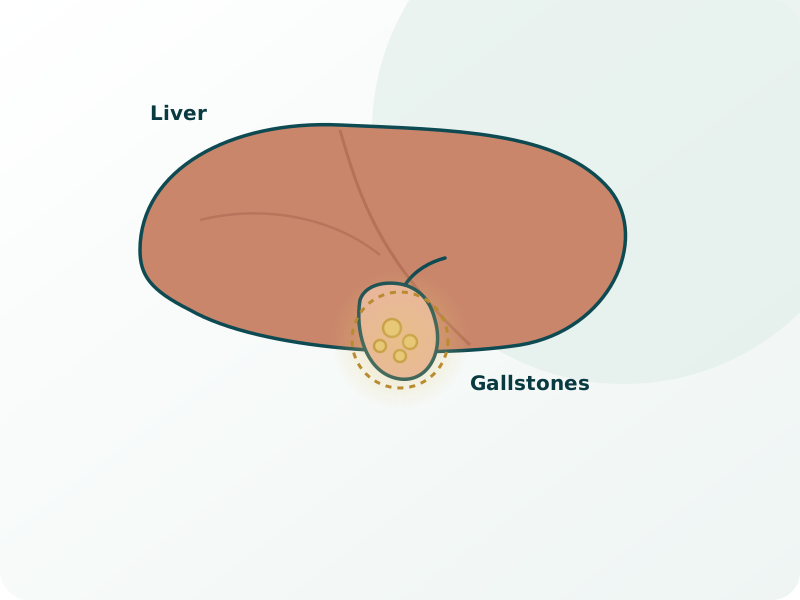
Long-standing gallstones are the strongest risk factor — years of stones and chronic inflammation drive the lining towards cancer. Other contributors studied in India include chronic typhoid carriage, a porcelain (calcified) gallbladder, gallbladder polyps larger than 10 mm, an abnormal junction of the bile and pancreatic ducts, and possibly heavy metals in Gangetic groundwater. Women over 50 with gallstones for more than a decade are the highest-risk group.
The warning signs on an ultrasound
A gallbladder wall that is thickened unevenly, a polyp of 10 mm or more, a polyp that has grown since the last scan, a gallbladder mass, or a gallbladder that seems stuck to the liver. Any of these needs a contrast CT scan and a hepatobiliary surgeon's opinion before anyone operates — because the first operation is the one that matters.
Why the first operation decides everything
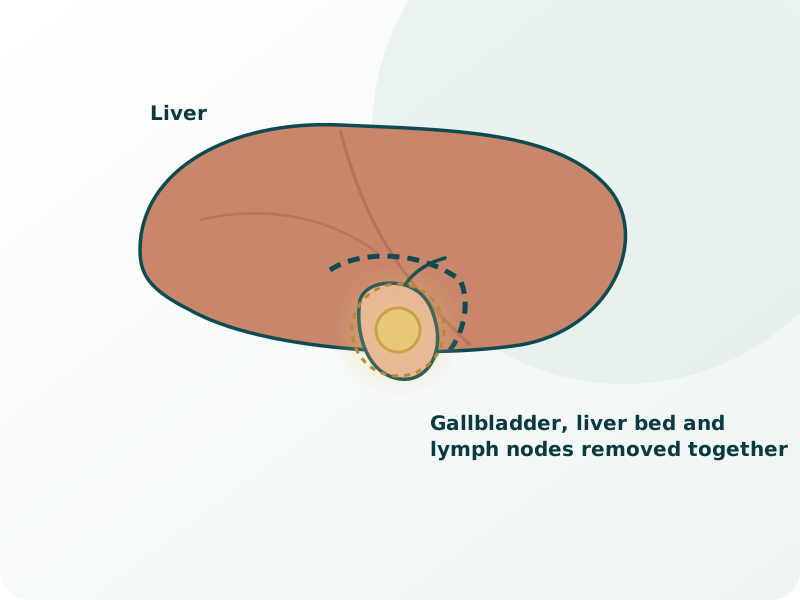
If a gallbladder with unsuspected cancer is removed with the standard laparoscopic technique — perforated, squeezed, pulled out through a port — tumour cells can spread into the abdomen and the port sites, and a curable cancer becomes an incurable one. A suspicious gallbladder should be removed by a surgeon prepared to do a radical operation in the same sitting: the gallbladder with a wedge of adjoining liver and the surrounding lymph nodes, handled without spillage.
Cancer found after a routine gallbladder operation
This is called incidental gallbladder cancer and it is common in North India: the operation was for stones, the biopsy a week later reads 'adenocarcinoma'. What happens next depends on how deep the tumour went. Tumours confined to the innermost layer (T1a) are cured by the operation already done. Anything deeper (T1b and above) needs a completion radical cholecystectomy — liver bed and lymph nodes — ideally within four to eight weeks. The histopathology report, the operation notes and, ideally, the slides should go to a hepatobiliary surgeon quickly.
What the radical operation involves
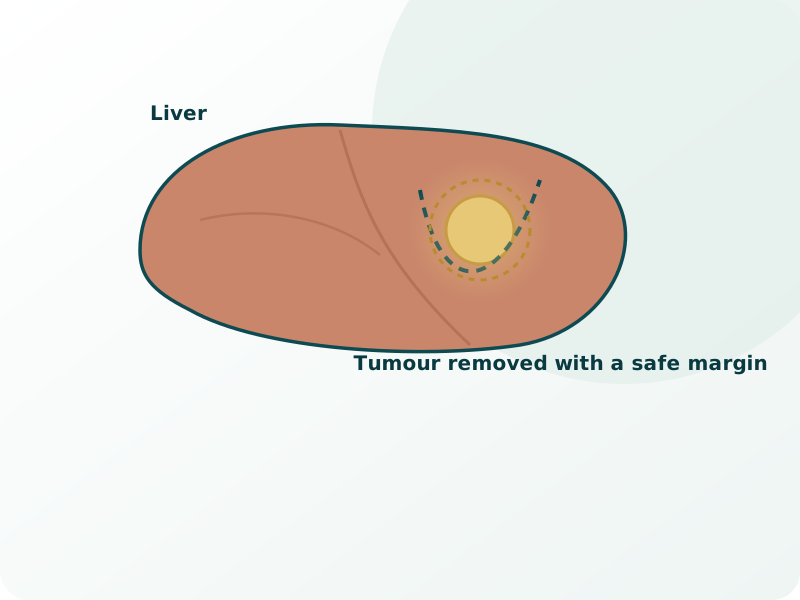
Removal of segments IVb and V of the liver (the bed the gallbladder lay on) and the lymph nodes along the bile duct, hepatic artery and portal vein. If the tumour has grown into the bile duct, the duct is removed and reconstructed; large tumours may need a formal right hepatectomy. This is liver surgery, and outcomes are best in the hands of a surgeon who does liver surgery every week. Hospital stay is five to eight days.
Chemotherapy and results
After radical surgery, chemotherapy is recommended for most tumours beyond the earliest stage. Five-year survival after a complete operation for early-stage disease is good; for advanced disease it remains poor, which is why the emphasis is on the ultrasound findings, the first operation and the speed of the completion surgery.
If you have gallstones and live in the Gangetic belt
Do not ignore symptomatic stones for years; have the gallbladder removed when it starts causing trouble. Have polyps measured and followed. And if an ultrasound describes a thick or irregular wall, ask for a hepatobiliary opinion before a routine laparoscopic operation is scheduled.
Sources
- Dutta U, Bush N, Kalsi D, Popli P, Kapoor VK. Epidemiology of gallbladder cancer in India. Chin Clin Oncol 2019;8:33.
- ICMR–NCDIR. Report of National Cancer Registry Programme 2020. National Centre for Disease Informatics and Research, Bengaluru.
- NCCN Clinical Practice Guidelines in Oncology: Biliary Tract Cancers.
Dr Manoj Gupta
MBBS, MS, DNB (GI Surgery). Senior Director & Head, Robotic & Laparoscopic GI Surgery, GI Oncology and Liver Transplant, Yatharth Super Speciality Hospital. 20+ years, 500+ liver transplants.
This article is general medical education and does not replace a consultation. Figures quoted are from the sources listed and from typical outcomes at experienced centres; your own numbers depend on your condition.