Post-operative ward · GI surgery
The scariest part is before
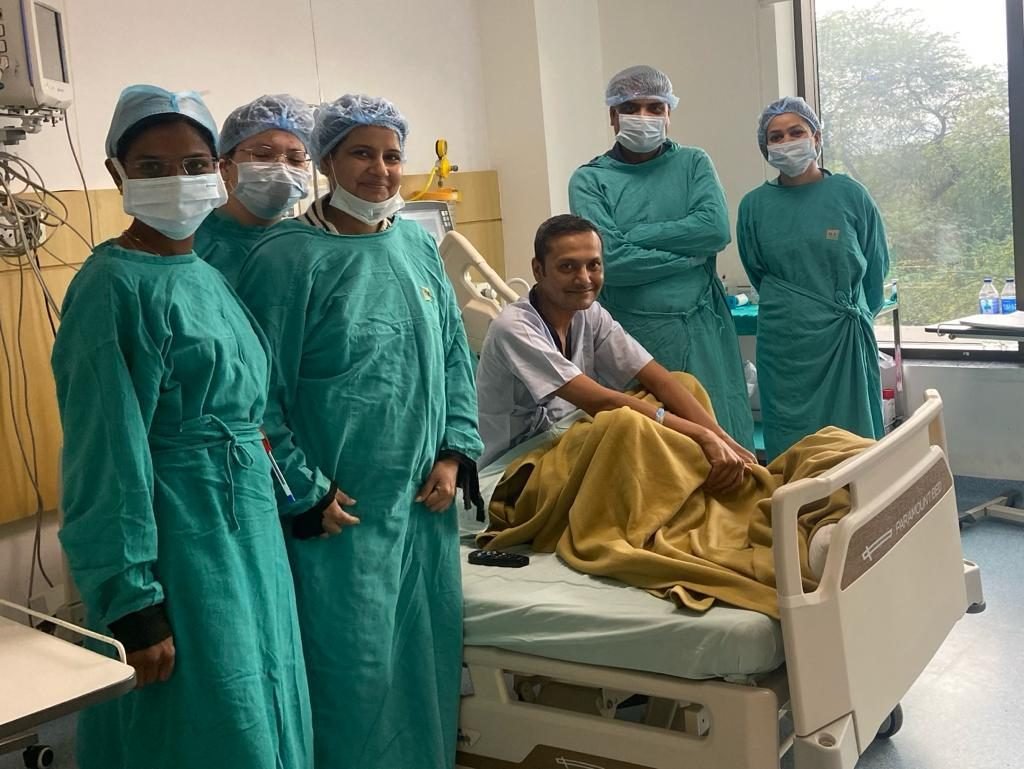
For a young patient the days before surgery are the hardest — the unknown of anaesthesia, the fear of pain, the worry about what the surgeons will find. The team's job is to make the operation the least frightening part: a clear explanation, a plan for pain, and a promise of an honest update the moment it is over.
Keyhole where possible
Younger patients gain the most from laparoscopic and robotic surgery — small scars, less pain, a faster return to studies or work. Dr Gupta uses minimally invasive techniques wherever the disease allows.
Family in the room
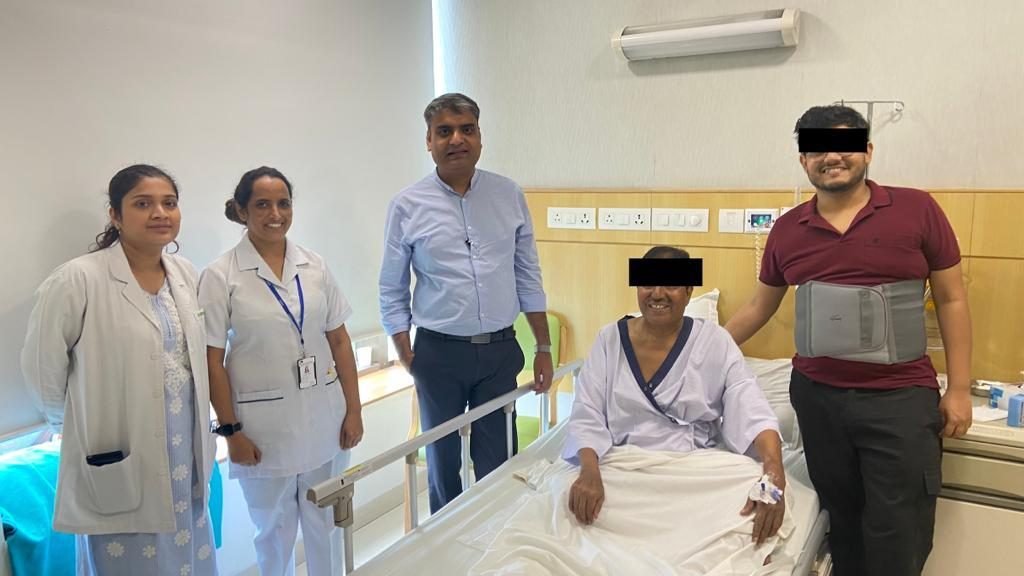
The family member who stayed through the night is part of the recovery team: encouraging the first walk, watching the first meal, asking the questions the patient is too tired to ask. That is why they are in the photograph.
The thumbs up
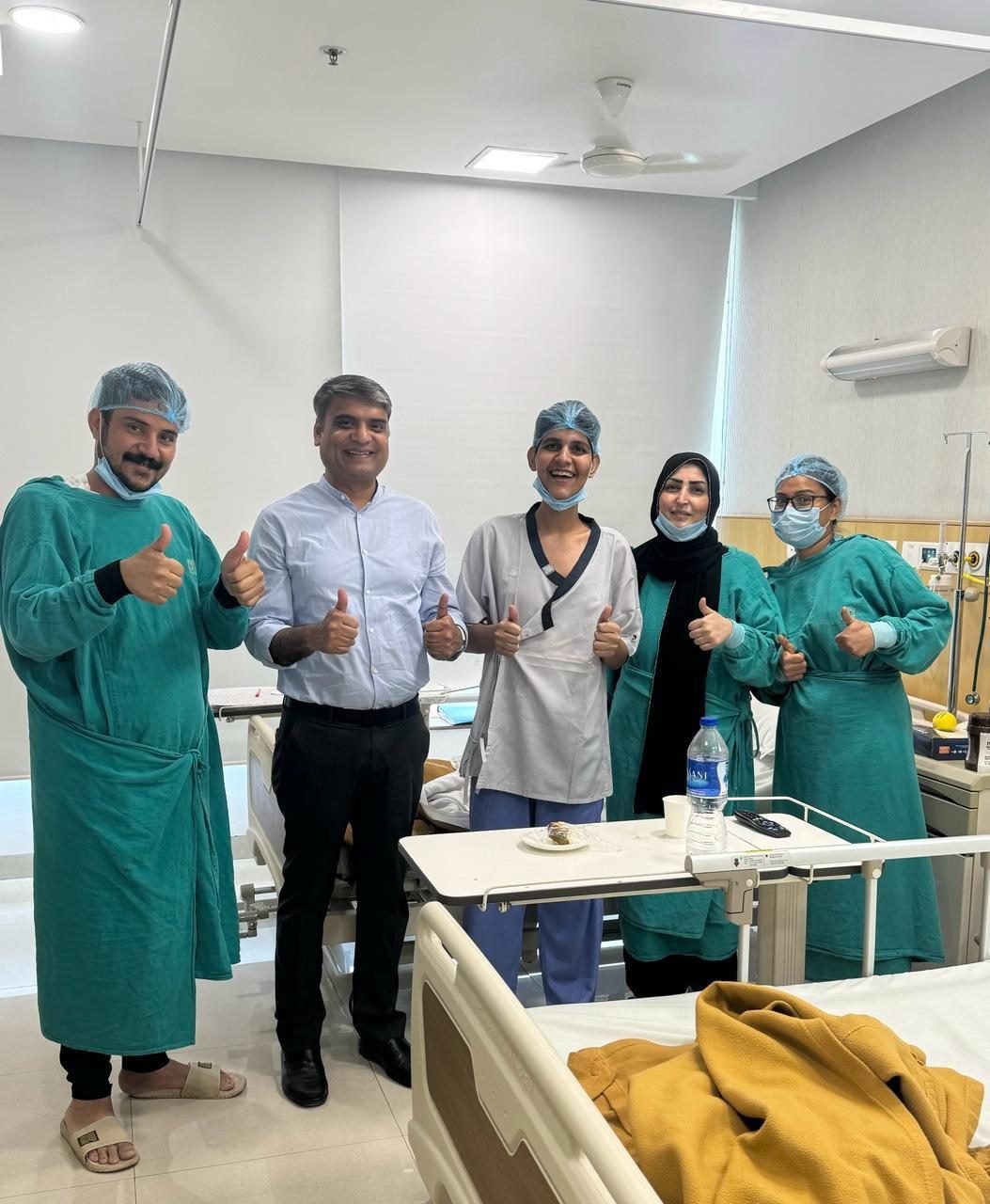
Taken on the ward once the patient was up and about — eating, walking, pain controlled on tablets. Discharge followed soon after.
“A young patient's recovery is fast if the surgery is gentle and the fear is addressed. Both are our responsibility.”
What this means for you
- Ask for a clear pre-operative explanation — it is part of the consultation
- Laparoscopic and robotic options exist for most GI operations
- Family are welcome and encouraged on the ward
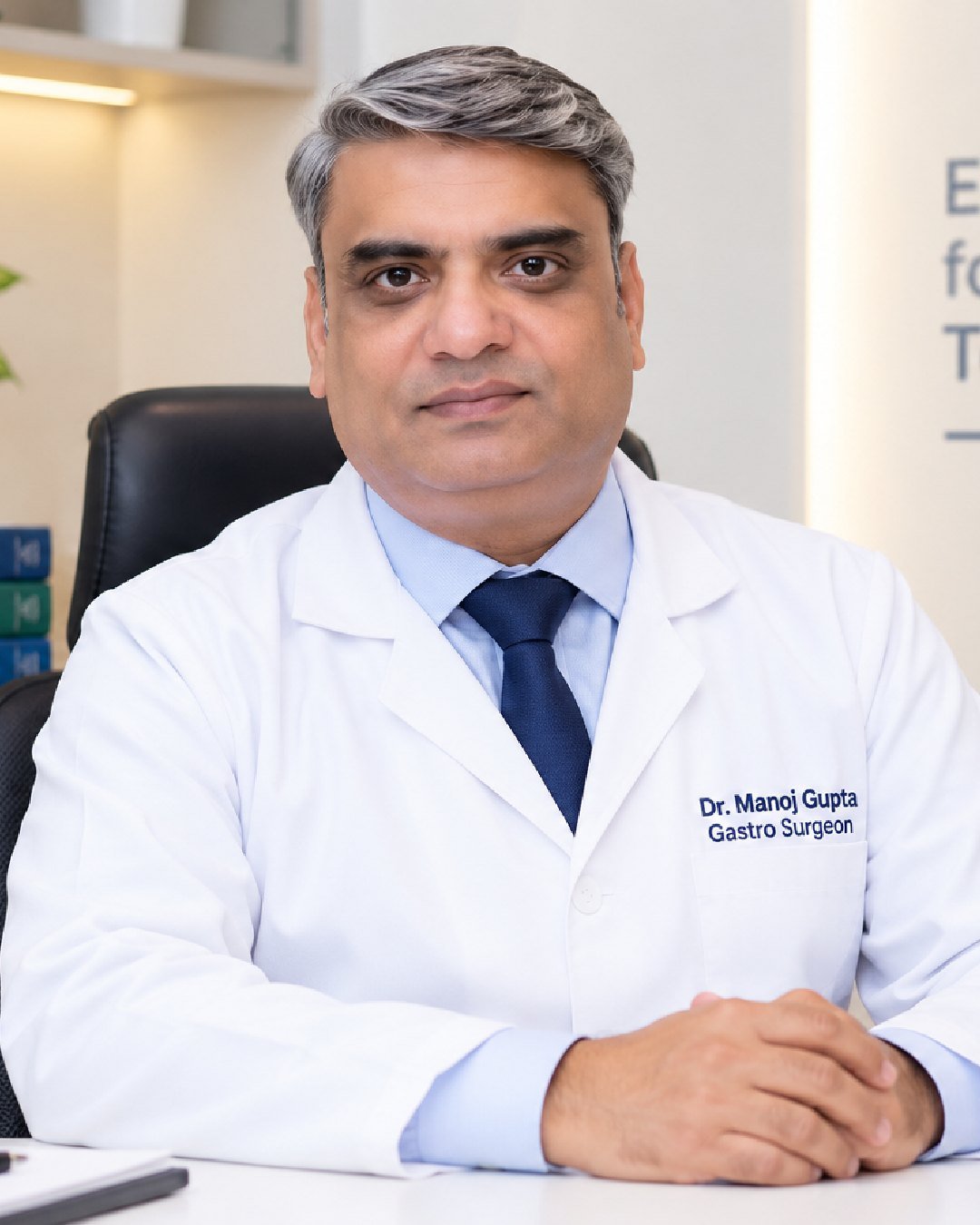
Dr Manoj Gupta
MBBS, MS, DNB (GI Surgery). Senior Director & Head, Robotic & Laparoscopic GI Surgery, GI Oncology and Liver Transplant, Yatharth Super Speciality Hospital. 20+ years, 500+ liver transplants.
Patient photographs are shared with consent. Identifying details are withheld for privacy; recovery timelines describe the typical course for this type of surgery.