Liver transplant ICU · first week
Why the gowns
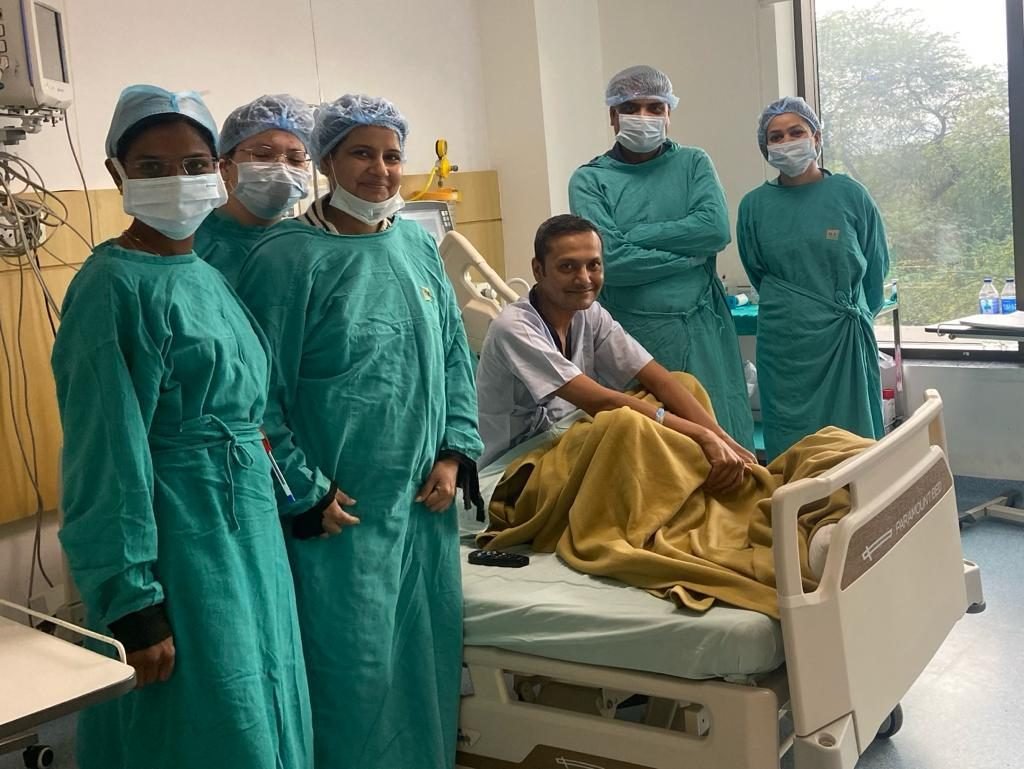
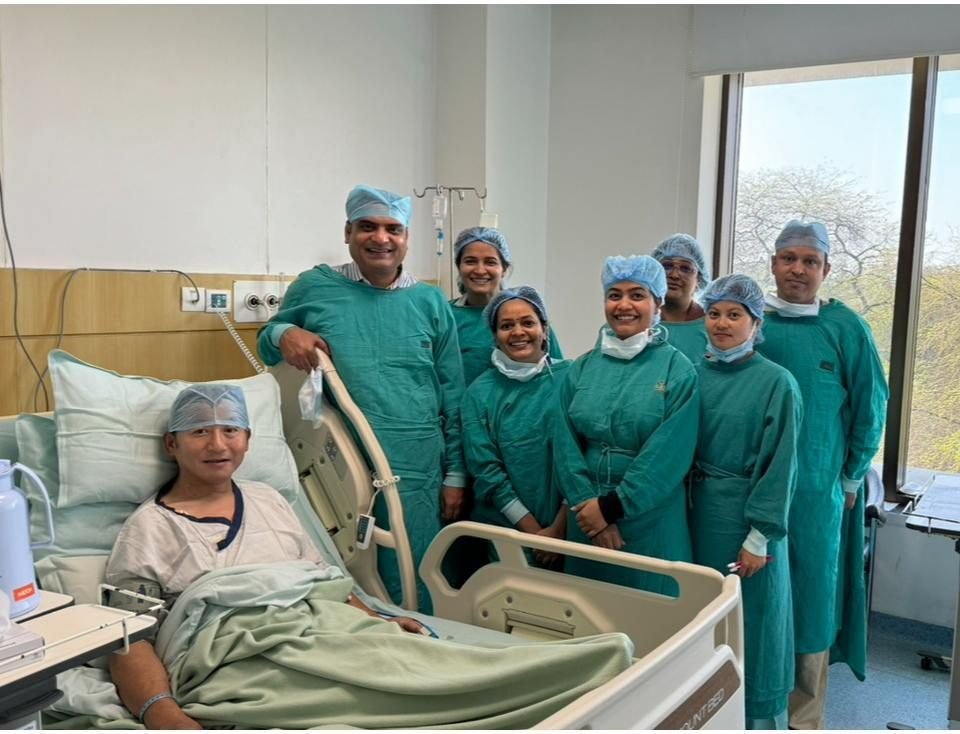
In the days after a liver transplant, anti-rejection medicines are at their highest and the patient is most vulnerable to infection. Every person entering the unit — surgeon, nurse, physiotherapist, family member — gowns, caps and masks, and hand hygiene is absolute. It looks intimidating; it is the reason the first week is safe.
What happens hour by hour
A Doppler ultrasound confirms blood is flowing through the new liver's artery and veins. Blood tests every few hours track how the graft is working. The breathing tube usually comes out within a day; the patient sits up, then stands, then walks with a physiotherapist. Feeding starts early. Drains and lines are removed one by one.
The team around the bed
A liver transplant is a team result. Dr Gupta leads the surgical team, but transplant anaesthetists, a hepatologist, dedicated ICU nurses, physiotherapists and a dietitian each see the patient every day — the same faces, so nothing is missed.
Out of the ICU
Once liver tests are steady, the patient is eating and walking and the immunosuppressant doses are stable, they move to the ward — usually by the end of the first week — and home about a fortnight later.
“Patients remember the ICU as the hardest week. We try to make it the most reassuring one — the same team, at the bedside, every single day.”
What this means for you
- Yatharth Hospital has a dedicated liver ICU, not a shared general ICU
- Family visits are allowed with gowning, at fixed times
- Ask the transplant coordinator for a daily update — it is part of the service

Dr Manoj Gupta
MBBS, MS, DNB (GI Surgery). Senior Director & Head, Robotic & Laparoscopic GI Surgery, GI Oncology and Liver Transplant, Yatharth Super Speciality Hospital. 20+ years, 500+ liver transplants.
Patient photographs are shared with consent. Identifying details are withheld for privacy; recovery timelines describe the typical course for this type of surgery.